What if the homes you love in Desert Highlands look sleek and modern for a reason? In North Scottsdale’s hot, arid climate, great design is more than style. It is how you stay comfortable, protect views, and enjoy outdoor living most months of the year. In this guide, you will learn what “desert contemporary” really means, how to recognize it, and which features matter most for value and everyday comfort. Let’s dive in.
What “desert contemporary” means
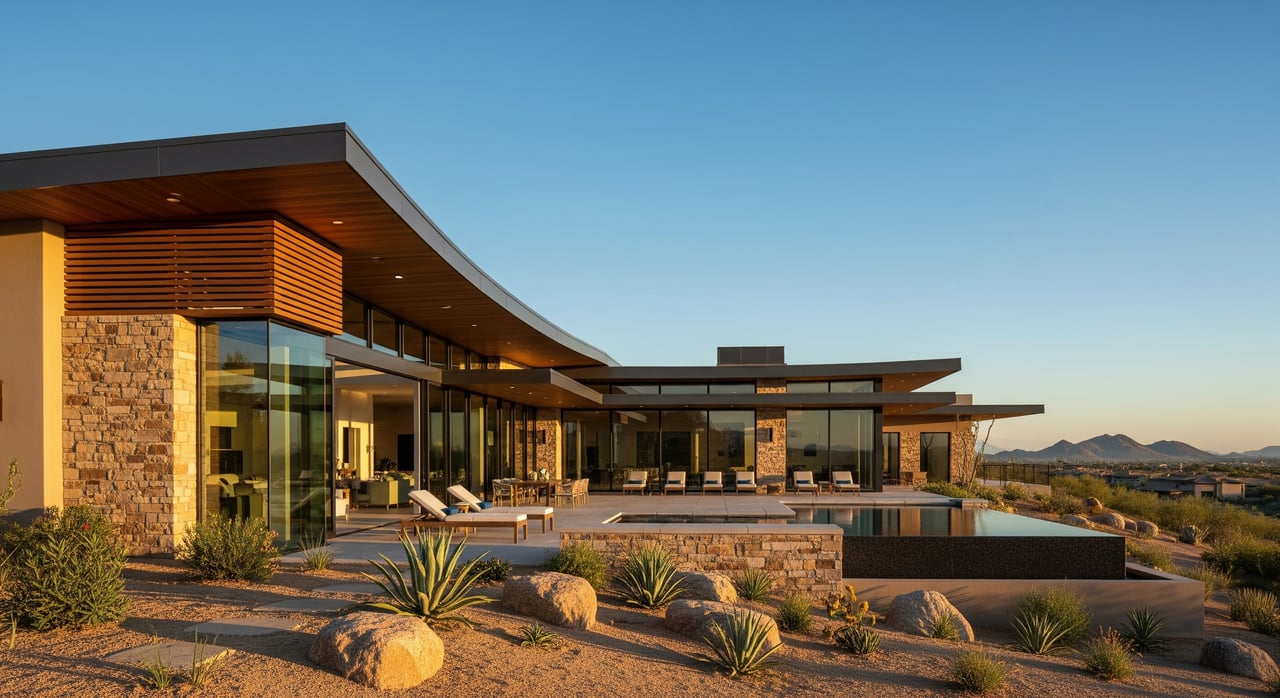
“Desert contemporary” describes homes that pair clean, modern lines with strategies tailored to the Sonoran Desert. You will see minimalist forms, earth-toned materials like stucco, concrete, stone, wood, and metal, and glass walls that are carefully shaded. The goal is comfort and performance without visual clutter.
This is different from historic Southwestern or stucco-adobe revival styles. Desert contemporary emphasizes simplified geometry, precise detailing, and explicit climate responses such as controlled solar gain, deep shade, and indoor–outdoor living. It is modern in look and practical in function.
How it evolved in North Scottsdale
Mid-century desert modernism across the Southwest set the tone with horizontal planes, integrated landscapes, and indoor–outdoor transparency. In Scottsdale, the influence of Frank Lloyd Wright’s Taliesin West helped shape local priorities around siting, shade, and honest materials. Today’s custom homes merge those ideas with contemporary sustainability and high-end building practices.
In Desert Highlands and neighboring communities, architects, builders, and brokers use “desert contemporary” to describe new builds and renovations that marry clean aesthetics with real climate strategies. You will see it across recent listings and custom estates.
The design playbook you can see
Massing and orientation
Homes often read as low, horizontal forms or crisp geometric volumes. Flat or low-sloped roofs with parapets keep silhouettes clean and conceal drainage. Designers compose solids and voids to frame views and create shaded outdoor rooms.
Orientation matters. The best plans favor shading for west and east walls and place larger glass areas to the north or within protected courtyards. Narrow wings and courtyards help control sun, drive airflow, and build cool microclimates.
Materials and finishes
Expect a restrained palette. Smooth or textured stucco in earth tones anchors the exterior. Concrete floors or walls add thermal mass when paired with shade. Natural stone accents and warm woods like cedar or ipe soften the look. Dark, thermally broken metal is used for structure and trim.
Performance and color go together. Light exterior finishes and reflective coatings reduce heat absorption. When interiors are well shaded and ventilated, concrete and masonry can help moderate day-night temperature swings.
Shading and solar control
In our climate, shading is the star. Deep overhangs and recessed glazing block high summer sun while allowing lower winter light where desired. You will also see pergolas, horizontal louvers sized for Phoenix sun angles, and exterior motorized shades or screens.
The tradeoff is simple. Large glass without shade leads to overheating and higher cooling costs. Thoughtful shade preserves views while managing heat and glare.
Glass and window performance
Large panes and floor-to-ceiling sliders or folding doors are common, especially on north-facing or shaded facades. West and east openings tend to be smaller, higher, or more deeply recessed. That balance is intentional.
Look for performance features: low-e coatings and spectrally selective glass to manage solar heat gain, insulated double-pane units as the market norm, and thermally broken frames in aluminum or fiberglass. Fritted glass or exterior screens can reduce glare while keeping transparency.
Indoor–outdoor flow
Desert contemporary homes are built around connection. Pocketing or folding doors can erase the line between living rooms and covered patios, often keeping a continuous floor plane. Outdoor living may include ceiling fans, misters, or radiant heat to extend usable months. Central courtyards or water features can act as visual anchors and microclimates.
Landscapes lean water-wise. Native plant palettes, decomposed granite, and minimal turf match community expectations and lower water use. Hardscape choices like stone pavers and concrete pair with planned shade and efficient irrigation.
Systems and sustainability
You will often find high-efficiency cooling systems, sometimes rooftop solar, and smart shading or home automation. Newer custom builds typically exceed older insulation and sealing standards, which helps comfort and operating costs. Outside, efficient irrigation and low-water landscapes support long-term stewardship.
What it means in Desert Highlands
North Scottsdale’s Sonoran Desert climate brings intense sun, long hot summers with frequent 100-degree days, and limited rainfall. Shading, high-performance glazing, efficient mechanical systems, and water-wise landscaping are not optional. They are central to comfort and lower utility costs.
Desert Highlands is a gated, upscale golf community known for custom estates and desert-sensitive landscaping. The HOA uses design review, which is typical for high-end neighborhoods. If you plan exterior changes, expect to coordinate with the community’s architectural guidelines and City of Scottsdale permitting.
Market-wise, buyers often look for strong indoor–outdoor connections, high-end finishes, and outdoor living that works nearly year-round. If a home claims to be desert contemporary, the design and performance should support the claim.
Buying a desert contemporary home
Smart evaluation checklist
- Orientation and shade: Are the largest glass walls on the north or otherwise well shaded with overhangs or screens? Is west-facing glass minimized or protected?
- Glass specifications: Ask for window and door specs like U-value, SHGC, and low-e details, plus the age and capacity of HVAC systems.
- Door thresholds: Inspect where pocketing or sliding doors meet patios. Look for proper drainage, weatherproofing, and thermal breaks.
- Landscape and irrigation: Review plant palettes, irrigation efficiency, and any turf. Low-water design is practical and market aligned.
- Exterior materials: Check stucco, wood, metal, and sealants. High sun and occasional monsoon weather set maintenance cycles.
- HOA and approvals: Understand Desert Highlands HOA rules for additions, colors, and visible mechanicals.
Inspection and documentation
Ask for recent HVAC service records and efficiency ratings. Request window performance data. Verify flashing and waterproofing around large openings and patio covers. Confirm HOA approval for visible exterior changes.
Selling or renovating for today’s buyer
Upgrades that signal value
- Shade and outdoor living: Add or enhance covered patios, pergolas, and retractable screens to expand seasonal comfort.
- Windows and doors: Upgrade to high-performance low-e double-pane glazing. Ensure large sliders or folding doors operate smoothly and seal tightly.
- Landscape conversion: Replace thirsty turf with purposeful xeriscape and quality hardscape. It reads well and reduces water use.
- Cohesive finishes: Refresh stucco in consistent earth tones, refinish wood accents, and upgrade exterior lighting to sharpen the desert contemporary look.
- Mechanical and energy: Service or upgrade HVAC, consider solar PV where appropriate, and keep documentation for buyers.
Projects to approach with care
Major structural changes to massing can be costly and will require HOA and city approvals. Pools are common, but shading and placement determine real-world usability. Focus on design that supports comfort and lower maintenance rather than size alone.
Communicating to the market
Be precise with language. Use “desert contemporary” when the home shows modern lines, purposeful shade, appropriate glazing, and indoor–outdoor flow. Disclose known issues, such as failed window seals or heat gain concerns, and confirm that all visible changes received HOA approval. Clear documentation builds buyer confidence and protects your sale.
Next steps
If you are weighing a purchase or planning a renovation in Desert Highlands, the right strategy starts with site, sun, and shade, then finishes and systems that support daily comfort. When these pieces align, you get the sleek look you want and the performance this climate demands.
For calm, expert guidance tailored to Desert Highlands and North Scottsdale, connect with Fine Homes Group for a complimentary valuation or a white-glove consultation.
FAQs
Is lots of glass a problem in Scottsdale homes?
- Large glass walls are desirable for light and views, but they must be paired with shade, low-e glazing, and good orientation to avoid high cooling loads.
Do concrete or masonry make a house hotter?
- Thermal mass can help when interiors are shaded and ventilated. Mass absorbs heat by day and releases it at night, which works when glazing and shade are well designed.
How important is water-wise landscaping in Desert Highlands?
- It is very important for curb appeal, utility savings, and long-term stewardship. Native plants and efficient irrigation are common expectations.
Will the Desert Highlands HOA limit a contemporary remodel?
- Most high-end communities use design review. You should review Desert Highlands guidelines and start early on approvals for exterior changes or additions.
Which upgrades resonate most with buyers today?
- Shaded outdoor living, documented energy improvements like efficient HVAC or solar, and cohesive exterior finishes that read as intentional desert contemporary.