If you love homes that frame a mountain like art, Estancia delivers. Set along the north slope of Pinnacle Peak in North Scottsdale, the community was designed so architecture and landscape work together to capture dramatic scenes. In this guide, you’ll learn how Estancia’s styles, lot orientation and topography shape what you see from your terrace every day, plus what to ask before you buy. Let’s dive in.
Estancia at a glance
Estancia is a private, guard-gated luxury community planned for low density and strong view preservation. Spanning about 640 acres, it features roughly 223 custom homesites and a small enclave of about 39 semi-custom villas known as the Homes of La Scala. The member-owned Estancia Golf Club, a Tom Fazio design of approximately 7,314 yards, anchors the neighborhood’s social and visual core.
This framework matters for how you live. Larger lots, careful spacing and elevation changes allow architects to orient living areas, pools and terraces to either Pinnacle Peak, the golf course or, from higher pads, sweeping valley and city-light panoramas.
Why the views stand out
Estancia wraps the base and northern slope of Pinnacle Peak, a Scottsdale landmark with a well-known trail system and distinct rock formations. The mountain’s shape and the community’s elevation bands create layered outlooks that vary from intimate mountain compositions to big-sky valley scenes. For a sense of the landform and trail elevations, review the City of Scottsdale’s overview of Pinnacle Peak Park.
Because density is low, many homes maintain long view corridors without immediate rooflines in the way. On higher pads, you tend to look over the golf course and neighboring roofs to the Valley. On lower or mid-slope pads, the silhouette of Pinnacle Peak often becomes your daily focal point.
Architectural styles you will find
Tuscan villas near the clubhouse
The Homes of La Scala offer a cohesive Old World character. You’ll see tile roofs, smooth stucco and stone, arched openings and walled courtyards that live as outdoor rooms. These villas, planned near the clubhouse, provide a traditional palette and a walkable setting for those who like formal terraces and classic details.
Desert-modern and contemporary custom homes
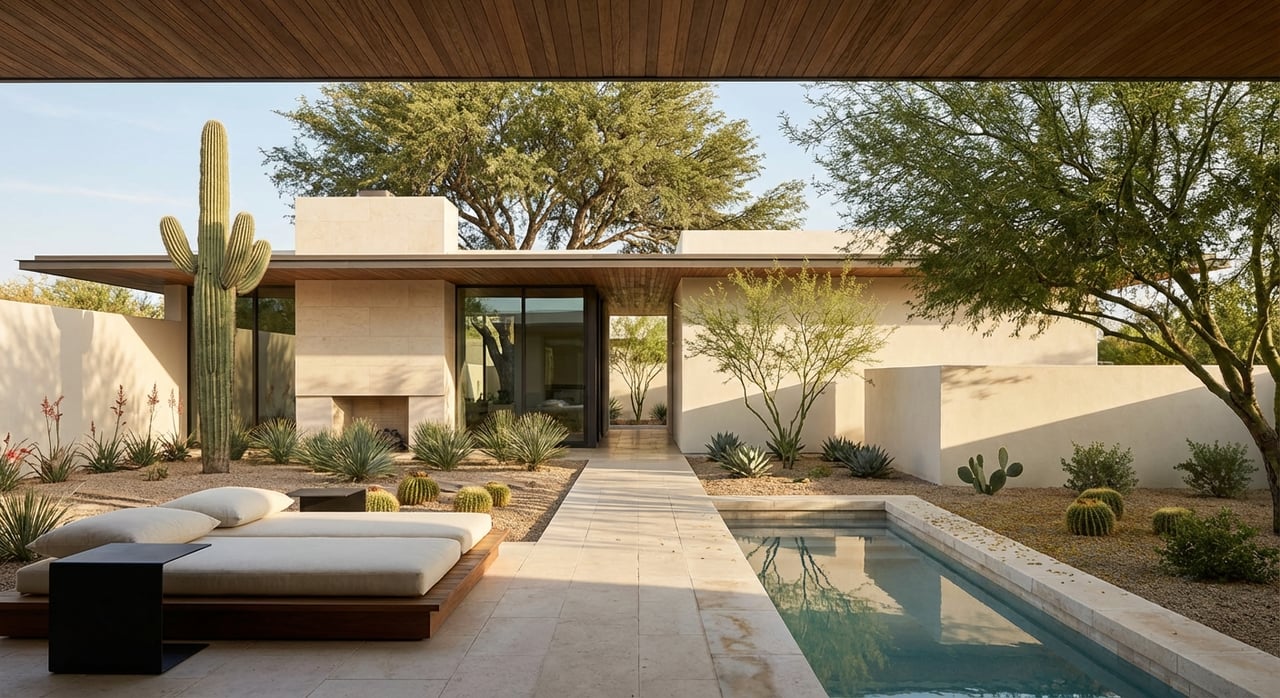
Recent custom work in Estancia leans desert contemporary. Think low-profile volumes, single-level living, long linear pools and wide pocketing glass that blurs inside and out. Natural stone, wood and metal accents are common, and glazing is often placed to frame Pinnacle Peak or valley lights. A strong example is Drewett Works’ “Pinnacle Pavilion,” which showcases modern pavilions, pocket doors and material warmth tailored to view lines in Estancia. Explore the approach in the Drewett Works project overview.
Topography, orientation and sun
Elevation and sightlines
Lot elevation is the first driver of what you see. A home on a high pad can deliver broad night vistas of the city, often with a long pool and low parapet roof to keep the horizon open. A home tucked closer to the mountain tends to celebrate the rock faces and desert vegetation, with fairways adding green foregrounds. Designers talk about “view corridors,” which means aligning windows and terraces to a planned axis while keeping massing and landscape low along that path. For a quick primer on how professionals evaluate views, see this overview of visual-impact and viewshed analysis.
The tradeoff is simple. If you prioritize sunsets and the drama of Pinnacle Peak, a closer, slightly lower site can be ideal. If you prize city lights at night, look to higher elevations and south to southwest orientations that clear nearby rooftops.
Solar exposure and comfort
West and southwest exposures deliver the sunset and valley-light shows many buyers want, but they increase afternoon heat. Smart design choices keep comfort high without sacrificing glass. Look for deep overhangs, exterior shading elements, and high-performance glazing with appropriate SHGC and low-E specifications. For background on passive cooling strategies in hot climates, review this Building America guide.
Roof and wall assemblies matter as well. Light-reflective roofing, quality insulation and careful detailing help manage solar gain, which allows larger panes of glass to stay comfortable through the peak summer months.
What to look for when you tour
Documents to request
- Current HOA CC&Rs and the Estancia Architectural or Design Guidelines in PDF. These outline materials, massing and landscape standards.
- Recorded plat and easement maps to confirm buildable areas and any utilities or view-affecting easements.
- Full site plan with existing and proposed finished-floor elevations and contour lines for a true topographic picture.
- Building elevations and roof-ridge heights to understand future sightline relationships.
- Any recent Design Review Board approvals for adjacent lots that could change the outlook over time.
On-site checks
- Visit at mid-day, late afternoon, and dusk to judge sun, sunset color and city-light quality. Ask for dusk and night photos.
- Walk the site and nearby pads to confirm ridgelines and vegetation that influence the view corridor.
- Verify compass orientation and confirm how great room, primary suite, terraces and pool align with the main view axis.
- Note placement of HVAC, pool equipment and trash areas so noise or sightlines do not interfere with terraces or patios.
Design and performance
- Assess west and southwest glazing. Ask about SHGC, low-E, exterior shading and overhang depths.
- Review roof and wall specifications for heat management without reducing glass area.
- Ask for the exterior lighting plan and HOA lighting rules. Overly bright fixtures can affect nighttime enjoyment.
Red flags to investigate
- Significant cut or fill, tall retaining walls or engineered foundations that add cost or alter the view.
- Unrecorded easements or planned public improvements that could interrupt a valley outlook.
- Height variances granted to neighbors that may block a one-story plan.
- Lack of a recorded view easement. Most jurisdictions do not guarantee a right to a view unless recorded.
How architecture shapes daily living
When architecture is tuned to the site, the whole day flows better. Morning light across Pinnacle Peak reads soft and sculptural, so primary bedrooms or breakfast terraces often face the mountain. Afternoon and evening scenes tilt toward the valley and golf course, which suits great rooms, pools and dining terraces. Many desert-modern plans keep profiles low and horizontal so the eye lands on the horizon, not on rooflines.
Indoor-outdoor thresholds are the star in Estancia. Pocketing glass doors, shaded loggias and linear pools extend living areas into the landscape. Materials like textured stone, smooth plaster and warm woods add tactile calm while withstanding the desert climate.
Working within HOA and design review
Estancia uses community standards to maintain quality and protect the feel of the neighborhood. Before you make a decision on a home or lot, request the current CC&Rs and the Architectural or Design Guidelines. These documents, along with recent Design Review Board approvals, help you understand height limits, material preferences, lighting rules and landscape expectations.
If you plan to renovate or build, confirm grading and drainage requirements early. On sloped sites, engineering can be a major line item and can influence where your best view axis lands.
How we help you choose the right home or lot
Choosing in Estancia is about more than square footage. It’s a composition of view, light, privacy and daily flow. Our team helps you evaluate orientation, verify documents, and compare dusk and night photography across options so you can decide with confidence. We coordinate with listing agents and, when helpful, introduce vetted local architects and engineers for early feasibility input.
If you’re selling, presentation and distribution are everything. We pair premium architectural storytelling with national exposure to reach qualified buyers who understand the value of a Pinnacle Peak outlook.
Ready to explore Estancia? Connect with the Fine Homes Group for a calm, concierge experience. Request your complimentary home valuation or schedule a white-glove consultation, and let’s align architecture, light and view to your goals.
FAQs
What makes Estancia unique for views in North Scottsdale?
- The community’s low density, large lots and position along the north slope of Pinnacle Peak create varied sightlines that range from close mountain drama to broad valley and city-light panoramas.
How do lot elevation and orientation affect Estancia views?
- Higher pads often clear rooftops for sweeping valley lights, while mid or lower elevations highlight Pinnacle Peak and golf fairways; south to southwest orientations favor sunsets and night vistas.
What should I ask the HOA or listing agent before buying in Estancia?
- Request the CC&Rs, current Architectural or Design Guidelines, recorded plats, site plans with finished-floor elevations, and any recent Design Review Board approvals for nearby lots.
How can I enjoy city-light views without overheating the home?
- Combine high-performance glazing with deep overhangs and exterior shading; review passive cooling strategies like those in this Building America guide for desert climates.
Are view corridors protected in Estancia?
- Designers plan view corridors through site placement and low massing, but rights to a view are typically not guaranteed unless a recorded easement exists; HOA standards help manage but do not replace legal easements.
Is contemporary architecture accepted in Estancia?
- Yes, many recent custom homes are desert-modern or transitional, using low profiles, large glass and natural materials to frame Pinnacle Peak and valley vistas, while meeting community design standards.