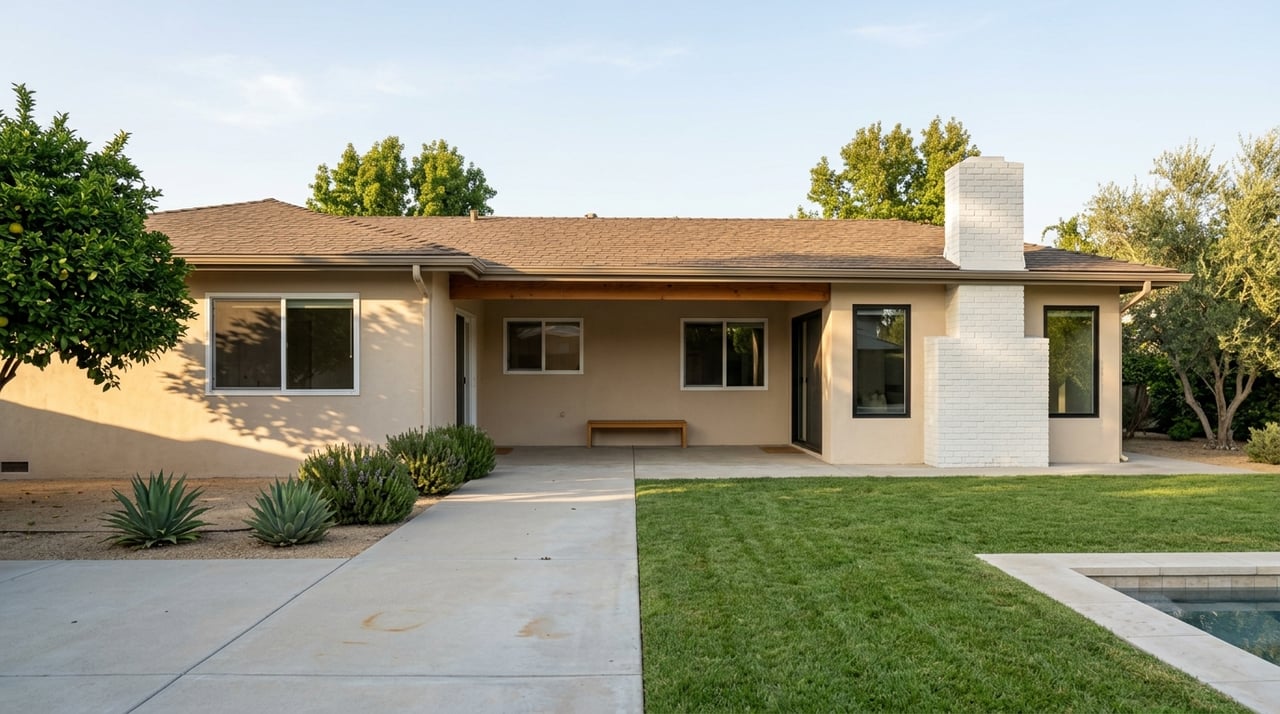
If you love Arcadia but want room to make a home your own, a classic ranch may be the sweet spot. Many buyers are drawn to the area’s large lots, established streetscapes, and mid-century housing stock, but they also want updated layouts, better efficiency, and space that fits how they live today. The good news is that Arcadia often offers exactly that opportunity, if you know how to evaluate remodel potential before you buy. Let’s dive in.
Why Arcadia ranch homes stand out
Arcadia is widely understood as the area north of the Arizona Canal and south of Camelback Mountain, generally between 44th Street and Scottsdale Road. Its early development grew from irrigated rural estate lots, and the neighborhood’s roots still shape what buyers experience today. That history helps explain why lot sizes, lot shapes, and site layout matter so much here.
Early Arcadia lots were originally marketed as citrus orchard properties and often ranged from about 5 to 10 acres. Over time, those larger holdings were divided and redeveloped, but the legacy of spacious parcels and irrigation remains part of the area’s identity. For you as a buyer, that means a property’s potential is often tied to the land as much as the house itself.
Arcadia also remains largely single-family in character. Phoenix planning materials show a preservation-oriented framework in much of the Arcadia Camelback area, with much of the district planned at 0 to 2 dwelling units per acre. That low-density pattern is one reason the neighborhood continues to feel distinct, but it also means changes to a property need careful review.
What defines a classic Arcadia ranch
Arcadia has more than one architectural story. Older homes in the area include Pueblo Revival, Monterey Revival, and Spanish Colonial Revival styles, which often feature more decorative forms, clay-tile roofs, stucco or adobe walls, porches, balconies, and exposed details. These homes add depth and beauty to the neighborhood, but they can be more complex to alter.
The classic ranch is different. Phoenix survey materials describe ranch homes as one-story, rambling forms with low-pitched hipped or cross-gabled roofs, overhanging eaves, exposed rafters, picture or ribbon windows, and attached garages. In practical terms, that simpler massing can make a ranch a more flexible starting point for a thoughtful remodel.
If you are buying with renovation in mind, a straightforward roofline is often a plus. A ranch home can be easier to update without dramatically changing its street-facing appearance. That matters in Arcadia, where preserving the look and scale of the original front facade is often an important part of a successful project.
Why lot shape matters as much as square footage
One of the biggest mistakes buyers make in Arcadia is focusing too much on interior square footage and not enough on the site. Lot geometry in the area is not uniform. Some sections were shaped by terrain and replatted in ways that created more site-specific lot lines and configurations.
That means two homes with similar lot sizes may offer very different remodel options. A deeper rear yard may be more useful than a wider side yard, depending on setbacks and placement. Slope, orientation, and the relationship between the house and the lot lines can all affect what you can realistically add.
In Arcadia, a house with “good bones” is only part of the equation. You also want a lot that can absorb change without making the home feel oversized or out of balance from the street. Often, the best candidates are ranch homes with enough rear-yard depth to allow an addition while keeping the original front massing intact.
How Phoenix rules shape remodel potential
Before you fall in love with a property’s possibilities, it helps to understand the local review process. Phoenix requires residential construction permits for many common remodel projects, including additions, garage or carport construction or conversion, porch enclosures, demolition, patio covers, and fence or wall work. So even relatively modest changes can trigger formal approval steps.
Historic review can be another major factor. If a home is individually designated or located within an HP or HP-L district, exterior changes require review by the Historic Preservation Office before the permit process can move forward. Interior work that does not affect the exterior generally does not need that historic review.
For buyers in Arcadia, this is a key point. Remodel potential is not just about whether you could imagine a better floor plan. It is also about whether the home’s status, location, and exterior character allow your plans to move forward in a reasonable way.
What kinds of updates fit Arcadia best
Phoenix historic design guidance points toward a clear remodeling approach for older homes. In general, the city encourages owners to retain original materials where possible, repair rather than replace deteriorated features, and place additions at the rear when feasible. Additions should remain subordinate in height and width and stay compatible with the original roof form, openings, and exterior materials.
For many Arcadia ranch homes, that creates a practical roadmap. The strongest remodel paths often include updates that improve function while respecting the original street-facing shell. That can mean reworking the interior layout, adding at the rear, improving a patio or porch, or considering garage or carport conversions where allowed.
Energy upgrades can also be part of a smart renovation plan. Phoenix recommends starting with an energy audit and notes that common high-value measures include duct sealing, HVAC or heat-pump upgrades, insulation improvements, water heater updates, and window improvements. In an older Arcadia home, those systems upgrades can materially improve comfort and operating efficiency without requiring a dramatic exterior change.
Don’t overlook irrigation and mature landscaping
In Arcadia, irrigation is not just a lifestyle feature. It can be a real planning issue when you are evaluating remodel potential. SRP explains that irrigation water is delivered through canals and laterals, then moved through private neighborhood systems to individual properties.
Flood irrigation typically places about 2 to 3 inches of water on the yard. That supports deeper roots and larger shade canopies, which helps explain why mature trees and lush landscaping are such a recognizable part of parts of Arcadia. It also means you should look closely at how irrigation layout, tree placement, and root zones may affect future additions, grading, or outdoor improvements.
A beautiful yard can absolutely add value to your experience of the property. But if you plan to expand the home, the landscape is part of the site analysis, not just a backdrop. In Arcadia, mature trees, irrigation responsibility, and yard configuration can all influence what is realistic.
A practical checklist before you buy
If you are shopping for an Arcadia ranch with remodel potential, it helps to approach each property with a disciplined lens. The right house is usually a combination of architectural simplicity, lot usability, and regulatory fit.
Here are some of the most important items to confirm before you move forward:
- Official lot size through the Maricopa County Assessor
- Zoning and lot coverage using Phoenix My Community Map
- Whether the property is individually designated or located in an HP or HP-L district
- Irrigation status and any private neighborhood irrigation responsibilities
- Permit history for past additions, conversions, or exterior work
- Roofline simplicity and whether a rear addition appears feasible
- Rear-yard depth, setbacks, slope, and overall lot orientation
- Placement of mature trees and landscape features that may constrain expansion
This kind of due diligence matters whether you are planning a modest refresh or a larger redesign. In Arcadia, the site often determines the project more than the square footage does.
Ranch remodel or newer build?
Not every buyer wants a project, and that is okay. If you value Arcadia’s established setting and are comfortable managing upgrades over time, a classic ranch can offer charm, flexibility, and the chance to create something tailored to your needs. The most promising options are usually homes with a clean roofline, solid structure, and enough lot depth to support change gracefully.
If you want less renovation risk, a newer build or rebuild may be a better fit. But even then, the same due diligence still applies. You still need to verify exact lot size, zoning, irrigation status, permit history, and whether any historic review could affect future work.
That is why Arcadia decisions are often site-first decisions. Whether you buy a ranch to revive or a newer home to enjoy as-is, success starts with understanding the lot, the rules, and the long-term fit for your goals.
When you are weighing those options, calm guidance matters. A thoughtful purchase in Arcadia is rarely just about finishes or floor plan. It is about seeing the property the way a seasoned local advisor would, with equal attention to architecture, land, and what the city will actually allow. If you are considering a classic Arcadia ranch or comparing it to a newer alternative, Fine Homes Group offers white-glove guidance to help you evaluate the opportunity with clarity.
FAQs
What makes an Arcadia ranch home a good remodel candidate?
- In Arcadia, the best remodel candidates are often one-story ranch homes with a simple roofline, solid existing structure, and enough rear-yard depth to allow an addition without overpowering the front facade.
What should buyers check about lot size in Arcadia?
- Buyers should confirm official lot size through the Maricopa County Assessor and review zoning and lot coverage through Phoenix tools, because usable remodel potential depends on more than the listing’s stated dimensions.
What historic rules can affect an Arcadia remodel?
- If an Arcadia property is individually designated or located in an HP or HP-L district, exterior changes may require Historic Preservation Office review before permits can move forward.
What remodel projects usually require permits in Phoenix?
- Phoenix generally requires permits for additions, garage or carport construction or conversion, porch enclosures, demolition, patio covers, and fence or wall work.
Why does irrigation matter when buying in Arcadia?
- Arcadia irrigation can affect where you build and how you plan landscaping, because flood irrigation, mature trees, and private neighborhood irrigation systems may influence site layout and expansion options.
Is a newer build easier than remodeling a classic Arcadia ranch?
- A newer build may reduce renovation risk, but buyers still need to verify lot size, zoning, irrigation status, permit history, and any historic-review triggers before making a decision.